
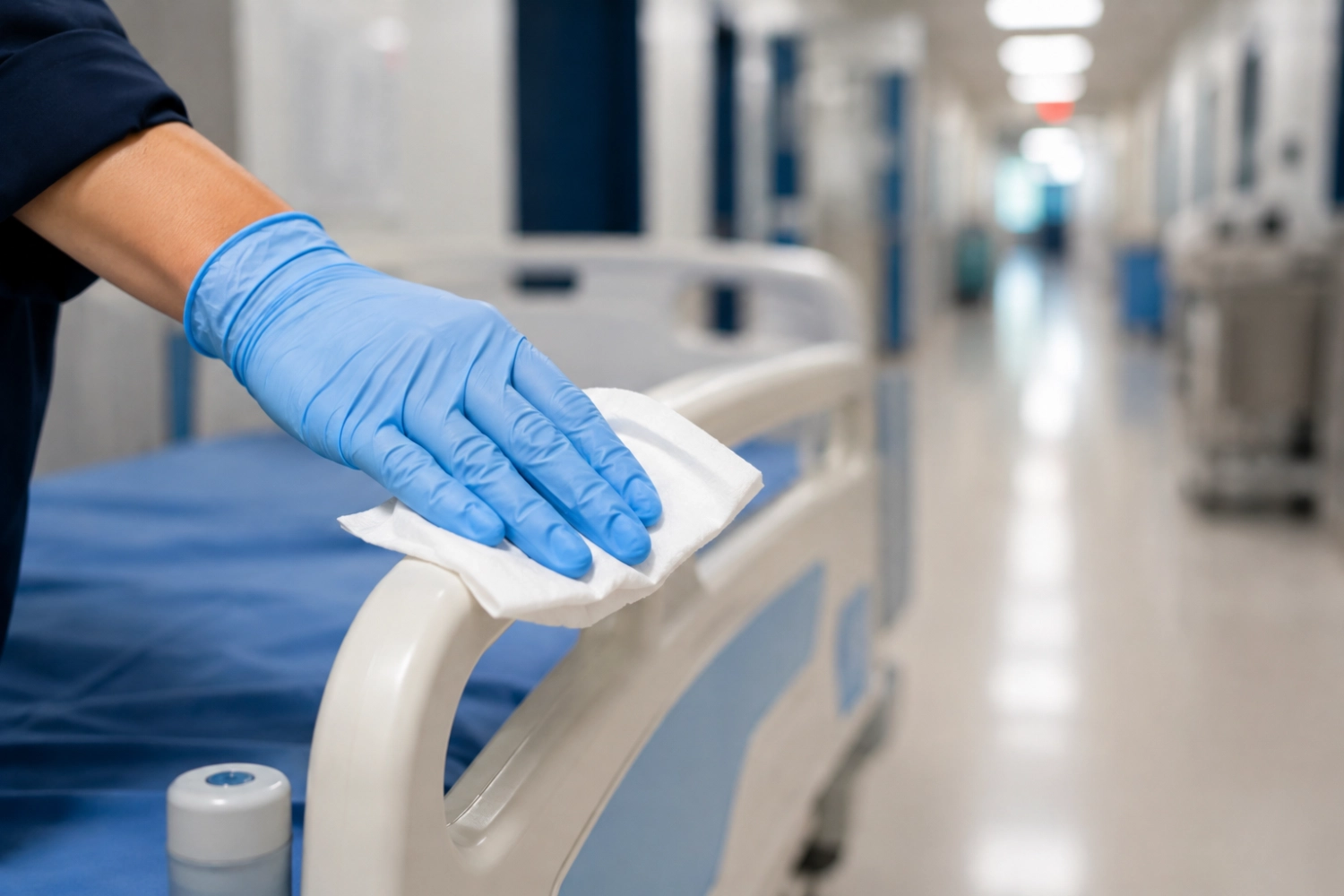
High-touch surfaces are handled frequently by multiple people throughout the day, increasing the risk of contamination and pathogen transfer. In healthcare and high-traffic environments, these surfaces are directly linked to infection spread, including healthcare-associated infections (HAIs).
Effective infection control requires identifying these surfaces and ensuring they are cleaned with proper disinfectants, dwell times, and consistent protocols. Most cleaning programs focus on what’s visible: floors, restrooms, and common surfaces. But risk doesn’t live in plain sight; it accumulates in the details. At Clean 2 The Kore, we don’t just clean what’s obvious; we pay close attention to identifying and eliminating risks, even in areas others overlook.
Most hospital administrators and facility directors don’t find out about an EVS staffing gap through a formal report. They find out through a failed audit, a spike in patient complaints, or worse, a healthcare-associated infection that traces back to a documentation failure or a missed terminal cleaning. By that point, the gap has been there for weeks or months.
What we want to walk through here is what’s actually happening in healthcare environmental services right now, why EVS staffing shortages create infection control risk that most facilities aren’t fully accounting for, and what a more reliable, sustainable approach to sanitized cleaning services looks like when your internal team can’t absorb the full load.
Why High-Touch Doesn’t Always Mean High-Attention
The term “high-touch surfaces” is widely used in cleaning, and many teams apply it too narrowly. While doorknobs and countertops receive attention, the surfaces surrounding them are often overlooked. Contamination spreads through patterns of movement rather than through isolated contact points. In a facility, staff, patients, visitors, and equipment interact continuously, creating a constant flow of activity. When cleaning protocols fail to consider this ongoing movement, gaps inevitably arise.
A significant percentage of healthcare-associated infections (HAIs) can be traced back to environmental surfaces, especially those inconsistently cleaned or improperly disinfected. The issue isn’t always effort; it’s precision.
What Are the Most Overlooked High-Touch Areas?
The most commonly overlooked high-touch areas in busy facilities include:
- Bed rails, call buttons, and patient controls
- Mobile equipment and shared devices (carts, IV poles, tablets)
- Door frames, push plates, and light switches
- Waiting room furniture and armrests
- Restroom secondary surfaces (locks, dispensers, partitions)
- High-traffic flooring zones
- Air vents, overhead fixtures, and elevated surfaces
Why These Areas Are Missed
If these risks are so critical, why are they often overlooked?
- Time Pressure: Fast-paced environments push teams to prioritize visible cleanliness, often at the expense of detailed disinfection.
- Lack of Structured Protocols: Without clearly defined, repeatable systems, cleaning becomes inconsistent. Teams may rely on habit rather than documented, compliance-driven processes.
- Insufficient Training: Teams not trained in infection control may overlook dwell times, cross-contamination risks, and proper sequencing.
- No Accountability or Documentation: If cleaning isn’t recorded, it cannot be verified, tracked, or improved.
The Most Overlooked High-Risk Areas & Risks Involved
1. Bed Rails, Call Buttons, and Patient Controls:
These are among the most frequently touched surfaces, yet often inconsistently disinfected during routine cleaning cycles. Without strict adherence to dwell times and proper use of disinfectants, these surfaces can quickly become reservoirs for pathogens.
The risk: Direct patient exposure and cross-contamination between staff and patients.
2. Mobile Equipment and Shared Devices:
IV poles, wheelchairs, carts, tablets, keyboards, and handheld scanners move between rooms, departments, and users. Many cleaning protocols focus on stationary surfaces, leaving mobile equipment under-addressed or inconsistently cleaned.
The risk: Equipment becomes a vehicle for contamination, spreading pathogens across multiple areas in a single shift.
3. Light Switches, Door Frames, and Push Plates:
While doorknobs often get attention, the surrounding surfaces, such as frames, push plates, and adjacent walls, are frequently overlooked. These areas are touched repeatedly, especially in high-traffic entry points like emergency departments, offices, and shared facilities.
The risk: Contamination builds in transition zones, increasing spread between “clean” and “dirty” areas.
4. Waiting Room Furniture and Armrests:
Chairs, armrests, and side tables are handled by numerous people every day. Routine cleaning can address visible dirt, but effective disinfection requires time, adequate coverage, and consistency, which are often compromised during busy periods.
The risk: High-volume contact points become silent transmission hubs.
5. Restroom “Secondary Surfaces”:
Restrooms are cleaned frequently but not always thoroughly. While sinks and toilets receive attention, secondary surfaces like stall locks, dispenser buttons, partition edges, and trash bin lids are often missed or inconsistently disinfected.
The risk: These overlooked touchpoints undermine the effectiveness of a thorough restroom cleaning.
6. Floors in High-Traffic Zones:
Floors are cleaned regularly, but not always strategically. In high-traffic environments, floors act as collection points for contaminants, which can then spread through foot traffic and equipment movement.
The risk: Contaminants are redistributed throughout the facility.
7. Air Vents, High Surfaces, and Overhead Fixtures:
Dust, particles, and contaminants accumulate in areas that are out of sight, such as vents, light fixtures, and upper surfaces. If these areas are not addressed regularly, they can reintroduce contaminants into cleaned spaces.
The risk: Airflow and gravity spread contaminants back onto sanitized surfaces.
Spring Infection Control Checklist for High-Traffic Facilities
Use this checklist to reset your cleaning strategy and close critical gaps:
- Identify all high-touch and shared-use surfaces across your facility
- Expand protocols to include secondary and mobile touchpoints
- Use EPA-registered disinfectants appropriate for your environment
- Follow strict dwell times for all disinfectants
- Train staff on PPE use and cross-contamination prevention
- Implement clean-to-dirty workflows
- Document all cleaning activities for accountability and compliance
- Schedule recurring deep cleaning for high-risk and hard-to-reach areas
The Clean 2 The Kore Approach: Precision Over Assumption
At Clean 2 The Kore, we follow a simple rule: if it’s high-touch, it’s high-priority. Our approach is built on precision, not assumptions. Every step in our cleaning process is intentional, from clean-to-dirty workflows to proper chemical use and appropriate dwell times. We don’t stop at routine cleaning; we also prioritize scheduled deep cleanings to maintain long-term control. True cleanliness is consistent, measurable, and rooted in meticulous attention to detail, ensuring that every aspect is handled correctly, every time. If you’re preparing for spring or looking to close gaps in your current routine, schedule a walkthrough with us today and discover how we create cleaner and safer environments

